Showing posts with label Oromo. Show all posts

Sunday, September 30, 2007

Beware of Mediator Bias and Mediation as a Tactic: A word to the Wise


In a news piece titled “encouraging reconciliation” and posted on its web site on Sept. 22, 2007, The Reporter informed its readers that “the panel of elders … have now their eyes on bringing the government and the Oromo Liberation Front (OLF) together and start a dialogue.” (Read HERE)

The Reporter, of course, is owned and published by Amare Aregawi who once was a TPLF official. The news paper is known for its close relationship with the clique currently in power in Ethiopia. “The panel of elders” it referred to is a group of Ethiopians which purportedly secured the release of CUDP (Kinijit) leaders from TPLF dungeon after they were convicted by Melles Zenawi’s court and applied for clemency.

This blogger would have dismissed the news as TPLF propaganda had it not been for the source cited in that news piece. That source is none other than Prof. Ephrem Isaac, the man who heads the supposed “panel of elders” and who also declared “My mother is an Oromo.”

However, given history of the mediator(s) and past TPLF behavior during negotiations /mediations, there is a need for acute awareness of the risks involved in moving into mediation with the TPLF particularly with the good professor and his team as mediator(s) for two reasons.

First, it has often been said that one major factor determining the success of third party mediation efforts is the perceived impartiality of the mediator(s). One of the Standards of Mediation Practice is that “A mediator shall avoid conduct that gives the appearance of partiality towards one of the parties.” As you will see below, the good professor has already failed to meet this standard of mediation practice and has shown partiality toward TPLF.

Second, if the best predictor of future behavior is past behavior, then mediation with TPLF will get no where but will harm the opposition parties and benefit TPLF. In the seventeen years it has been ruling the Ethiopian Empire, the TPLF regime has initiated or held negotiations with various internal opposition groups and liberation fronts. All of these efforts have two things in common. First, none of them came to fruition. Secondly, they all resulted in splitting and weakening the opposition parties and presenting TPLF to the international community as a regime interested in peaceful resolution of conflicts. In all these efforts, mediation was used as a tactic by TPLF without any genuine desire at all to settle the century old political problems of the empire and only to attempt to split the opposition into 'hawks' and 'doves' and force the 'doves' faction of the splintered opposition to join one of TPLF’s PDOs or join TPLF parliament. As you will see shortly, this has happened or has been attempted in almost every mediation/negotiation between the TPLF and its oppositions.

The mediator(s)

So, who is Prof. Ephrem Isaac? Imagine this.

It is the 1940s. You are born from an Oromo mother. You are uprooted from your birth place in a small town in Oromia at about 13 years of age and taken away to Finifinnee for “education.” At the educational institution you joined, you are probably the only Oromo boy. You are forced to learn the Amhara language because it was the medium of instruction and without it you cannot communicate with others around you. You look all around you and find out that no one speaks your language. Those that you hear speaking it once in a while are ridiculed and laughed at. At such a tender age, you are not old enough to have formed and be comfortable with your identity. You grow up with the feeling that your culture and language are not as good as theirs. No mention of your people’s history in your history class while the Habasha history is glorified. Then you start believing your people have no history or you find your people’s history embarrassing. You want to be like “them.” You try as hard as you can to dissociate yourself from this “embarrassing” history, culture and language. Before you know it, you have become an assimilado. You have become more Habasha than the Habashas around you. They, the habasha masters, are so happy with your performance (academic and assimilation wise) they ship you off to America for further education. You are very grateful and want to make them happier. Once in America you “fall in love with Ethiopian [habasha] culture” all over again. To you Ethiopian costume is the Habasha shammaa, Ethiopian history is Habasha history, Ethiopian food is the Amhara dooroo wax, Ethiopian dance is the Amhara skisttaa, etc …

In short, this is the story of Prof. Ephrem Isaac as gleaned from an interview he once gave to Ethiopian Television Network (ETN) in the Amhara language and other sources. (Listen HERE)

In this interview he proudly talks about “his history” - Abyssinian history. He reminisces about Minilik’s, Yohannes’ and Tekla-haymaanot’s culture of reconciliation with each other but no mention of their crimes against the Oromo and other Southern peoples in the empire. No mention of Oromo peace loving and reconciliation traditions either. Regardless of whether his mother is Oromo or not, Prof. Ephrem’s bias against the Oromo and for the Habasha is in the open.

Even with in the Habasha society, I doubt Prof. Ephrem can be considered an unbiased mediator.

In the same interview, the good professor rains praises on Melles Zenawi as a very bright, intelligent and “libbe saffii” leader. This is a man who presented the heads of the CUDP leaders on a silver platter to Melles Zenawi. He has also been lobbying the united states congress against “H.R. 2003- Ethiopia Democracy and Accountability Act of 2007” (Read about it HERE)

It is one thing to move into mediations with the help of well-meaning and impartial intermediaries and quite another getting involved in one mediated by a third party like Prof. Ephrem Isaac who really is not a mediator but a messenger for one side.

Mediation/Negotiation as a tactic to split the opposition

In 1995 the ONLF split into two over negotiations with the EPRDF. The “hawks” under the leadership of Sheik Abrahim Badalla continued armed struggle, while the “doves” led by Bashir Abdi Hassan joined the EPRDF after merging with the Pro-TPLF Ethiopian Somali Democratic League (ESDL) of Abdulmejid Hussein. “TPLF succeeded in fragmenting the ONLF by engaging its more moderate members in negotiations and into the region’s patronage and spoils system.” (Read HERE)

In 1997, TPLF engaged ARDUF in negotiations. The negotiation resulted in splitting ARDUF. The “hawks” continued the struggle, while the “doves” led by Muhyadin Maftah Kedir (The Deputy Secretary General of ARDUF who was arrested in Djibouti where he was undergoing medical treatment and spent one year in TPLF prison.) signed peace agreement with EPRDF. The peace agreement died after TPLF tried to force this faction of ARDUF to merge with the pro-TPLF Afar People’s Democratic Organization (APDO).

After many failed attempts at splitting the OLF, TPLF succeeded in 2001. According to observers of Oromo politics, the 2001 OLF split traces its roots back to a letter signed by the ‘doves’ group of the OLF leadership in early 1998 accepting TPLF pre-conditions in an effort jump start negotiations. The two preconditions TPLF always insisted, and continues to insist, upon are acceptance of the TPLF constitution and renouncing armed struggle. When the “doves” signed the pre-conditions, the “hawks” opposed it and convened OLF general Assembly in “Southern Oromia.” But by then the damage has already been done. The “hawks” vs. “doves” dichotomy has already set in. It is said that OLF never recovered from that division. Then, in 2000, came another olive branch to TPLF from the “doves” in the OLF leadership in the form of “Agenda for peace.” OLF’s “Agenda for Peace” became the proverbial straw that broke the camel’s back and led to its final split.

Then there is Kinijit. First came the UEDP-MEDHIN (Lidetu Ayalew’s party) split from CUDP (Coalition for Unity and Democracy.) According to many observers, Lidetu was engaged in negotiations with TPLF long before the split. Eventually, Lidetu and his party joined the TPLF parliament.

A word to the wise

Obviously, mediation/negotiation is a civilized way of resolving differences. In politics mediation/negotiation can be brutal. However, that is no reason to avoid them. On the other hand, past dialogues and negotiations with TPLF achieved nothing and undermined the oppositions’ organizational unity. Conversely, they strengthened TPLF politically and diplomatically. If you are going to engage in negotiations/mediations with TPLF, obviously; (a) The need for unbiased and impartial mediator(s) is paramount; (b) the risk of exposing your group to the danger of internal splits should be upper most in your minds.

Remain united to win.

Tuesday, August 28, 2007

Politics Makes Strange Bedfellows: Isaias Afeworki Pandering to CUDP?


After extracting his country (Eritrea) from the jaws of Ethiopian colonization after 30 years of liberation struggle, Isaias Afeworki says he strives for unity of the empire he separated from not very long ago.

In an interview he gave to Eritrean media on June 10, 2007 and published in “One Ethiopia” magazine, Isaias declared “It is our persistent stance to strive for a united Ethiopia.”

“One Ethiopia” is produced by the Eritrean Ministry of Information in the English, the Amhara and the Tigre languages, and distributed in the Diaspora by Eritrean embassies.

Even before one gets to read the content of “One Ethiopia”, a single glance at the cover page and one is left with no doubts as to the message the magazine intends to impart to the reader: Ethiopia’s unity and territorial integrity. Looking at the graphics and the caption on the cover page, if you did not know what Isaias looked like, you would think he were the leader of one of the Ethiopian opposition parties like the CUDP for whom Ethiopian unity is euphemism for Habasha hegemony.

Go ahead, open the magazine and look at the inside page of the cover. A map of the Ethiopian empire, adorned with the green, yellow and red of the empire’s flag with a caption reading “Ethiopian people’s Ethiopia” appears. The implication is that this is what the people of the empire would want to maintain. You would feel you were looking at an organ of, say, CUDP not at a magazine produced and distributed by Isaias and Co.

No don’t read the magazine. Not yet! Don’t even glance at the next page. Jump directly to the inside page of the back cover.

A map of the Ethiopian empire, partitioned into nine (9) separate territories with various flags and a caption reading “Woyane’s Ethiopia” appear on the page. Even Oromia, as we know it today, doesn’t appear as a contiguous territory. God only knows what Isaias meant by that! The intention here is to show the reader what would happen to the empire if it is to continue along the path the TPLF is taking it. Compare that with "Ethiopian people's Ethiopia" and what is implied is crystal clear.

Now, close the magazine and look at the back of “One Ethiopia”. Prominent on this page is, again, a map of the Ethiopian empire adorned with the empire’s flag colors and “Ethiopia” inscribed in the middle. Just above the map appear pictures of Seyye Abraha and Hailu Shawel side by side. Seye Abraha, you may recall, is a former partner in crime of Meles Zenawi’s against the Oromo people and former defense minister of the Empire who was incarcerated for six years on corruption charges before he was released in July 2007. He is the man who led the TPLF army which decimated our freedom fighters while they were encamped in 1992. Hailu Shawel, of course, is the former leader of All Amhara People’s Organization and current leader of the most backward Ethiopian opposition party (CUDP) who would roll back all achievements made by the Oromo people over the last 30 years if given a chance. Given a chance, him and his party (CUDP) would partition Oromia into smaller “kifle hagers” and would sell off all Oromo land to the highest bidder just as the TPLF is doing at the present time. It is no brainer that Melles Zenawi, Seye Abraha and Hailu Shawul have no difference in their view of the Oromo question.

What is the message between the covers of “One Ethiopia?”

No different from the message the covers portrayed. In this interview, Isaias Afewrki addresses many questions pertaining to the region in general, the Ethio-Eritrean conflict, the role of the US in the region and Somalia issues in particular. He rightly exposes the tyrannical nature of TPLF and the almost total control it is wielding on all aspects of life in the empire.

The gist of his message, however, is to reach out to the likes of CUDP by assuring them that he will strive (struggle, fight forcefully) along side them to keep the empire intact. Echoing the CUDP and speaking about the current TPLF constitution, and particularly about Article 39 (which is only on paper anyway) Isaias says:

“Since they [TPLF] have no faith in the Ethiopian people as a whole, they divided them into the Amhara people, Tigre people, Oromo people and many others. Because that is what their constitution asserts. The constitution allows the right to self-determination up to secession. We can say that the regime’s mental instability and dangerous political approach has taken a constitutional shape in the name of federalism and democracy. Ethiopia is thus exposed to a never seen before ethnic polarization, although it would take longer to discuss the dangerous consequences of such a situation.” (p. 46)

I don’t believe it is lost on Isaias that this is music to CUDP’s ears.

That TPLF’s mental instability is endangering the whole region, well beyond the empire’s boundaries, is no brainer and is widely acknowledged. However, it is not clear why Isaias Afeworki considers inclusion of self-determination up to secession in the constitution a dangerous political approach and why such a provision should be blamed for “ethnic polarization.” Unless, of course, the purpose is to pander to CUDP and the likes! What should the Oromo political party which he is currently hosting in his country, and who has repeatedly expressed the desire to make use of that part of the TPLF constitution, understand from this statement? That Isaias would sell them to the highest bidder?

As a former colony of the same empire Oromos and others are struggling to free themselves from, one would have thought Eritrea would take a principled approach and support the decolonization struggles of those nations who are still suffering under the yoke of Ethiopian Empire. Instead, Eritrea’s leader chose to pander to a party with retrograde Amahara-centric agenda. Apparently, to Isaias “What is good for the goose is [NOT] good for the gander.” In other words, what is good for Eritrea – an independent state - is NOT good for Oromia. If unity and territorial integrity of the empire is to the benefit of the colonized nations and nationalities, then why did Eritrea fight 30 years to decolonize herself?

It is the apex of hypocrisy to strive for a “unity” to which one does not want to be a party.

Have your say.

Wednesday, August 15, 2007

Nuro Dedefo Defends the Asmara Group's Law Suite


In an interview he gave to Oromo Community Radio on KFAI Radio without Borders 90.3 of MPLS – St. Paul, Nuro Dedefo confirms that the temporary restraining order against TA-OLF has been lifted, and that the Asmara Group of OLF is proceeding with the court case seeking permanent injunction against TA-OLF from using the OLF name, emblem and flag.

According to Nuro Dedefo, who was introduced by the interviewer as chairman of the USA chapter of the OLF [Asmara group,] his group was forced to go to court because TA-OLF booked the same conference room which the Asmara Group had previously booked for their public meeting on July 27, 2007. He informed the radio audience that after appealing to the courts and obtaining a temporary injunction against TA-OLF, they [Asmara Group] failed to post the necessary bond as ordered by the court. As a result, the restraining order was vacated.

Asked why they failed to post the required bond, Nuro says they refrained from doing so because TA-OLF re-scheduled their public meeting to a different date (from Friday to Thursday.) He goes on to say “Contrary to what they [TA-OLF] have been spreading, the temporary injunction was not lifted based on the merit or demerit of the case but because we failed to post the required bond.”

Responding to Nuro Dedefo’s assertion on this matter, my TA-OLF contact had the following to say.

“It is true that the meetings were scheduled on the same date and at the same conference center. However, it is not true that this was done intentionally on OLF’s part. Your readers should know that the OLF held its 2006 public meeting at the same conference center and on the same date (July 27, 2006.) The truth, in this case, is the OLF booked the conference center for July 27, 2007 before the Asmara Group. It, also, announced its meeting to the Oromo public well in advance of the Asmara group. The OLF became aware of the scheduling conflict with the Asmara group’s meeting on July 8, 2007 after it announced it to the public on MPLS’s Radio Voice of Oromia program. Soon after becoming aware of the scheduling conflict, the OLF decided to change its public meeting from July 27 to 26, 2007 and, as listeners of MPLS’s Radio Voice of Oromia program can attest, it announced this change to listeners of that radio program on July 15, 2007. The Asmara group filed their law suite on July 19, 2007, four days after becoming aware that the OLF had changed its meeting date to July 26, 2007. The matter was heard before a judge for the first time on July 23, 2007, 8 days after the Asmara group had become aware that the OLF had changed its meeting date to July 26, 2007. For Nuro Dedefo, who prides himself so much on being a lawyer, to get on a public airwave and make a false statement by saying “the OLF changed its meeting date after July 23, 2007; As a result we refrained from posting the required bond” shows how seriously he takes his lawyer’s oath which he swore to “…never seek to mislead … by an artifice or false statement of fact …” For those who do not know Nuro Dedefo, he "had a very noble job in Ethiopia," as president of the Arsi Regional High Court under TPLF. As for his legal opinion on the matter, the Internet is peppered with records of his losses as a lawyer and one is advised to not take him seriously. In 1998, he filed a complaint against Midwest Patrol and Commissioner of Economic Security in MN and lost. He appealed that decision to Court of Appeals and lost again (read HERE.) In 2004, he appealed a court decision against him granting an individual “an order for protection.” He lost that appeal too (read HERE.) In 2006, he filed a defamation suite against Aliyi Wake, et al. Upon lossing, he appealed the court decision and lost again. (read HERE.)

The list goes on and on but you get the point. The point is I would not want Nuro Dedefo to represent me in any capacity let alone in a court of law. As for who is OLF proper and who is not, suffice to say that no partner of Qinijjit can claim to be OLF.”

On whether the Asmara Group is seeking compensation from TA-OLF for using the OLF name for the last five years, Nuro made no mention of the $50,000 US they applied for in compensatory damages but said “what is past is in the past. What we are seeking is to stop them from operating under the OLF name in the future.” Interestingly, Nuro asserts that TA-OLF does not cause any damage to the Asmara Group but is a “nuisance.”

Asked if it was necessary to go to a USA court to determine who is OLF and who is not, Dedefo said TA-OLF had to be stopped from confusing the people by claiming to be OLF proper and causing a “nuisance.”

This blogger wishes the interviewer had asked Nuro Dedefo how much Oromo hard earned dollars are squandered on bringing this case to the courts. Hopefully, TA-OLF will also give an interview and let us know how much they have spent so far to defend the case.

Listen to Nuro Dedefo’s interview HERE

Saturday, March 10, 2007

Gaara Suffii: The Killing Mountain – Lest We Forget!

Iyyaa, iyya dabarsaa!


As described to me by a compatriot born and raised there, Gaara [Mount] Suufii is located about two hours walk on foot from Mi’essoo, to the North-East of Asaboot, in Eastern Oromia. The Oromo have a poem (walaloo/geerara) for Gaara Suufii which goes like this:

Asaboot koran malee
Suufii naannawan malee
Odaa jigaa hin arganii
Yoo lola bu’an malee
Dhiiraan walqaban malee
Garaa jagnaa hin arganii

By all accounts, it is there, on Gaara Suufii, that the TPLF regime murdered twenty Oromos early this year. It looks like TPLF is determined to turn every inch of Oromo territory in to killing fields. Oromos, young and old, women, children and the elderly, are murdered every where; in schools, on the streets, in their homes, in detention camps and now on mountains.

The heart wrenching account of the Gaara Suufii gruesome and politically motivated murders of Oromo political prisoners was brought to us by the VOA Afaan Oromo program on Wednesday Feb. 21, 2007. The victims range from a fourteen years old teenager, Ayishaa Alii, to a seventy year old elderly farmer Obbo Ahmed Mohhamed Kuree.

The ordeal of two ladies interviewed on that VOA program is truly heart wrenching to any one who values human life.

Aadde Kadijjaa Usuman is the wife of the late Obbo Ahmed Mohhamed Kuree from Mi’essoo. She and her late husband have nine children - eight girls and one boy whom she just stopped breastfeeding. Here is her account of how her husband was murdered as told to VOA during an interview (translation mine; You may listen to audio clips of the interview after the texts. English translation of each clip is provided as well.)

“My husband, Ahmed Mohammed Kuree, is a farmer. Farming is all he knew. The tax man took him away to “China Camp” after telling him that he had to go pay his taxes. He was told he was going to pay his taxes. They kept him there for one night only. The next morning, they took him to Gaara Suufii. After they took him to Gaara Suufii, we searched for him for three weeks to no avail. After three weeks and having heard a rumor, we went to Gara Suufii. After two days of searching, we found his prayer beads, his cloth and a single piece of his bone which the hyenas left behind after devouring the rest of his body and we took those items home. What is more, after we got home, they [our persecutors] condemned us for going to Gaara Suufii and for mourning. For fear of repercussions, we have not offered the customary prayer for the dead for my husband by reading from the Qur’an. Justice has not been served. That is where we are today!” [Audio clips in Afaan Oromoo English]

Adde Kadijjaa was asked how she found out that her husband was taken to Gaara Suufii.

She said: “A meeting was called which some of our people attended. Our people enquired about my husband at the meeting. At that point they said to his sister [my sister-in-law]: “Your brother has died. Go home and give up the search for your brother.” She [my sister-in-law] went home in tears. The next morning, a Kebele meeting was convened in the city. When my husband’s siblings went to that meeting and asked why he was killed, they [our persecutors] said “Since when does the government kill citizens? Come, we will show you where he is.” With that, they took them to the camp [China Camp]. Once at the camp, they were unable to produce my husband. Instead, they arrested my sister-in-law.” [Audio clips in Afaan Oromoo English]

Ayishaa Alii (see picture above) was a fourteen years old, barely a teenager. According to her mother, Aadde Shamsii Ahmed Muusaa of Mi’eessoo, a divorced mother of six, Ayishaa attended school in Asaboot up to grade four. She was forced to discontinue her schooling to help her mother raise her younger brothers. Aadde Shamsii described the events leading up to her daughter’s murder to VOA as follows.

“His name is Muhammad Boruu. He was armed. He arrived at 9:00 AM. He woke her up from where she was sleeping and ordered her to get on the motor-bike he came on. She [my daughter] had a wound on her behind which she told him about. He said to her “forget your wound. You are to be devoured by wild predator beasts” and ordered her to follow him. She followed him with only her skirt on her back. That was how he took my daughter away from me. Because he is [worked for] the government, we assumed he was taking her to a prison. I had always assumed she was detained and searched for her in detention camps for two weeks. After we heard the rumor about the old man [Obbo Ahmed Mohammed Kuree] I followed his family to Gaara Suufii [in search of my daughter]. There we found her skirt, sweater, under wears and her hair, braided and red [dyed in henna] as it was when she was taken away. That was all we found of my daughters remains.” [Audio clips in Afaan Oromoo English]

Speaking about others murdered with her daughter, Aadde Shamsii says:

“They [the government] continue to take individuals to this mountain and murder them. Besides my daughter’s, we have found many human remains. One example would be a henna dyed human hand. There are many people missing and whose loved ones are hoping that they are in detention. They continue to murder people.” [Audio clips in Afaan Oromoo English]

The stories told by Aadde Kadijjaa Usuman and Aadde Shamsii Ahmed Muusaa are corroborated by others.

Obbo Abdulhakim Mohammed of Mi’eessoo district, Ciroo town, tells of the continued harassment and killing of Oromos in Mi’esso area, again to VOA.

“Just in the last two months, December and this month, hundreds of Oromos from the towns in this district – from Culloo, Ciroo, Baddeessaa, Habroo and Mi’essoo - have been herded to a concentration camp known as “China Camp” located here in Mi’essoo. After detaining them there, they took over twenty of them to Gaara Suufii in the middle of the night and shot them there. Eight of them are from Mi’eessoo district. Five are from other districts. Their names are Ashaa [Kormee], Ahmed Kuree, 70 years old, from Mi’eessoo, Shanqoo a labourer, Kedir Aliyyuu, a grade 8 student from Mi’eessoo, Yasin Mohammed Waday from Mi’eessoo, Alii Goolee, Saidee Ammadee, Kokaa Adam from Mi’eessoo district Faayyoo area. Others are, Ammee Shenkor from Tuulloo district, Hernaa Town, Ahmed Aliyyi Turee from Doobbaa district, Ciroo town, Abrahim Badhaasoo from Qunnii district, Odaa Bultum area. This is what we know so far.” [Audio clips in Afaan Oromoo English]

An elderly man who was a political prisoner at “China camp” for two and a half months, but did not want to be identified for fear of retaliation by the TPLF regime, describes the deplorable human rights abuses in that area as follows.

“There is always torture in that place. People are beaten up there day and night. That place is very worrisome. We were imprisoned there by Abdallaa Idiris and his colleagues. Abddalaa Idris is the leader of the [government] Militia deployed to Western Hararge. Abrahim Kamiilaa is second in command. Aadam Dheeraa is the third person. Alamayyoo is the lead interrogator. These people arrest and torture individuals day and night. They take them away at night around midnight, 2 AM, 3 AM or 4 AM. Among those taken away, were Ashaa Kormee and Ahmed Kuree. They took them away at 4:00 AM in the morning. They never came back. We have heard that they have been killed. Their prayer beads, pictures and ID cards have been found, particularly that of Ahmed Kuree. Of the girls [killed], it is said that their skirts have been found. For these reasons, the situation in that area is grim. Others are being persecuted under the pretext of their siblings joining armed groups [to fight against the government]. For instance, from Asaboot area, siblings of Abrahim Walii, Ahmad Mahammad Walii and Haadha Ahmad are being persecuted under such pretext.” [Audio clips in Afaan Oromoo English]

Speaking about others detained at that location, the same elderly man says:

“People are brought there from every where: from Doobbaa, Galamsoo, Baddeessaa, Ciroo. They bring people there from as far away as Adaamaa and Dheeraa town in Arsii. There are many people detained there. Prisoners are not allowed to see each other or communicate with others. At times about 30 prisoners share a cell. There are many people there. We [some of us] survived a deplorable situation. In that detention camp, they beat prisoners at night. After chewing Khat, prison officers get into manic behaviors. and start torturing prisoners. They ask about the OLF army that prisoners are alleged to have been feeding. Women and the elderly are also subjected to the same treatment. IRC (International Red Cross) is not aware of the grave [human rights abuses] situation in that area. Neither are other human rights advocates. Relatives are not allowed to visit the prisoners.” [Audio clips in Afaan Oromoo English]

As you can see or hear, their stories are consistent and shows that impunity for human rights abuses remains the norm in Ethiopia. “Nama iyyeef ollaan dirmata” jedha Oromoon. Do international human rights advoctaes know about this massacre? Does the world know? Have we done our part to bring the plight of our compatriots to the attention of the world public?

Lest we forget Gaara Suufii!

Please forward the English version of the clips to as many human rights advoctaes as you can.


Also, have your say!

Wednesday, February 21, 2007

Oromo Schools: TPLF Shooting Ranges


Emboldened by the support it received from Western governments in return for his role in ousting Union of Islamic Courts (UIC) from power in Somalia, TPLF has now turned its attention to what it does best in the country: Murdering, injuring, incarcerating and torturing Oromo students.

The latest victims, according to Human Rights Watch (HRW), are students in Ghimbi and Dambi Dollo, where four have been murdered, tens have been injured requiring hospitalization and tens have been incarcerated and tortured.

What happened to Gemechu Benesa Bula and Lelsa Wagari Bula in Ghimbi (Guyii) is reminiscent of the often told stories about what KKK did to their black captives. It is said that they would take them to the forest, dare them to attempt to escape, and let them loose. While the black captives sprinted from behind one tree to another to save their lives, KKK target practiced on them. In the end, KKK killed their captives.

Just like the KKK black captives, Oromo students know for sure that no good can come to them from TPLF police. Therefore, at the sight of this blood thirsty force, they take to their heels to escape beating, detention or murder. Unfortunately for Gemechu and his cousin Wagari, this one took place NOT in a wooded area but in an open field around a school. There were no trees to shield them from TPLF bullets raining on them. Consequently, unlike the KKK captives, the cousins did not stand a chance of staying alive even for a few minutes. The trigger happy TPLF police used them for target practice as if they were two targets at a shooting range. As always, their motto is “shoot first and ask questions later!”

The killings, beatings, arrests and torture in Dambi Dollo are not isolated incidents. These kinds of abuses have been and continue to be so pervasive across Oromia that I am personally afraid it will desensitize the world and the Oromo Diaspora. Whether my fear is justified or not, we have to tell the suffering of our people to whom ever is willing to listen. This is the least we can do from where we are.

You may read HRW’s “Letter to Ethiopian Ministers on Human Rights Violations Against [Oromo]Students” While there, please read “World Report 2007” pertaining to Ethiopia. Scroll down to the "Continuing Abuses in the Countryside" section to findout what is happening in Oromia.

The honest truth is that I am personally tired of appealing to western governments and international organizations to hold TPLF to conventions and Human Rights instruments it has agreed to uphold. Letter writing campaigns and demonstrations of the last 17 years have produced no results and there is no hope that they will in the future. What is required to help our people is to defeat TPLF. There are two ways to defeat TPLF: Peaceful means and armed struggle. Which one do you think has better chance of defeating TPLF? Do you ask yourself what you can do to help defeat TPLF?

Have your say!

PS: I invite Obbo Nuguse Biratu and his likes to read HRW’s letter. Once finished reading, please look in the mirror and reflect on what you have done to the great Oromo nation for a few dollars.

Thursday, February 08, 2007

Nuguse Biratu: A TPLF Mouthpiece

A Traitor and a disgrace to the Great Oromo nation?


Nuguse Biratu, a one time chair person of Oromo Community Associations in New York City and Washington D. C. turned TPLF mouth piece, gave an interview to a TPLF Pal Talk room. A recording of his interview can be found HERE.

When I saw Nuguse Biratu’s picture on the link above, I struggled to remember if it is a familiar face to me. At first, it was not. I had heard his name mentioned in relation to the infamous “Bergen Conference” but I could not recall meeting him or having seen his face. I searched my memory for about half an hour to no avail. I had almost given up when, all of a sudden, it hit me. I have seen this face before.

It was early 2000 and we had gathered together in front of the UN building in New York City to protest the burning of Oromia forests and the ever increasing human rights abuses perpetrated against the Oromo people the TPLF regime. Most of us had traveled from all over North America to be a collective voice for our voiceless people. I can still see Obbo Nuguse in my mind, in that crowd, standing three feet away to my right chanting “Meles is a fascist”,”Meles is a dictator”, “There is no peace in Ethiopia”, “There is no democracy in Ethiopia”, etc … just like the rest of us. Then my mind wondered to his recent interview with the TPLF Pal Talk room and I could not help but be filled with a feeling of stupefied astonishment. I wondered what he would have said about that protest during the interview had he been asked about it. Then it occurred to me that he claimed to have actually organized that protest in his interview which made me sick to my stomach and caused me to wonder how many of his likes are lurking amongst us today and when the next one will come out of the closet.

Obbo Nuguse’s ability to change allegiances at will is astonishing to say the least. He claims to have founded ENDO (Ethiopian National Democratic Organization) with Shaleqaa Yosef (currently of Kinijit) and others. In his own words, ENDO rejected working with ethnic based organizations and those that used or advocated armed struggle as means of struggle. Then, he changes allegiance and becomes an OLF supporter – an ethnic based organization by any definition and engaged in armed struggle with the TPLF regime. He claims to have risen to a position of membership in an OLF “think tank” group. By his own admission, he organized demonstrations in the USA against the TPLF regime up until 2006. Then, with no explanation, he changes his allegiance again and becomes an EPRDF member. He travels to Mekele to attend their “6th congress.” Obbo Nuguse the man, who would have nothing to do with ethnic organizations using armed struggle as a means of struggle in 1990, turns OLF supporter and “advisor” soon after. The same man, who claims to have worked hard to help bring the plight of the Oromo people under the TPLF regime to American public attention turns TPLF’s mouth piece. He now portrays Oromo university students and school children as nothing but hooligans bent on causing chaos and havoc. He bad mouths Macha-Tullama self help association blaming them for standing up for their rights. Does this guy believe in any thing? Has he no shame?

Naturally, the next question that came to my mind was “why did he do this? Why all this flip-flopping?” If he was exposing TPLF records to the world, as he claims he had been doing up until 2006, what changed between 2006 and now? TPLF’s human rights records have not improved but actually worsened, especially against the Oromo people. To add insult to injury, TPLF is inflicting misery, not only on Oromos in the country, but on those in exiles in Somalia as well.

What do you think of Obbo Nuguse treason and how do you explain his change of heart toward TPLF? What do you know about his person: his character, his relationships, etc …

Have your say!

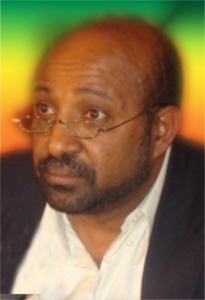
Berhanu Nega’s Shocking Encounter with Oromo Detainees Led to his Politcal Career


In a new book ("Ya Natsaannat Gohi Sii Qaddi") he wrote from Qaallitti prison, Dr. Berhanu Nega of Kinijit claims to have been forced to directly become involved in politics to save Ethiopia from disintegration.

Dr. Birahuu, a Gurage national, was a one time EPRP member who joined the armed wing of the organization as a young man over two decade ago. Accused of factionalism, disillusioned by lack of democracy and sick of the centralized control leaders wielded over the organization, he left EPRP and immigrated to USA via the Sudan. While in USA, he earned his PhD in Economics and taught for a while before moving back to Finfinne. While in Finfinne, he led an ordinary life working for himself and teaching part time at Finfinne University until he was detained (at Ma’ikelaawii) for a speech he made to University students about academic freedom. It was in Ma’ikelawwii that he became friends with Professor Mesfin WoldeMariam. It was also in Ma’ikelaawwi that he came face-to-face with the sufferings and feelings of the Oromo who constituted majority of the detainees.

Dr. Biraanuu traces the roots of his political career to a “shocking” encounter he had with Oromo detainees at Ma’ikelaawii. He admits, his “decision to directly become involved in politics was fermented while I was detained by EPRDF at Ma’ikelaawii …” (Nega, Berhanu (1998 E.C.) Ya Natsaannat Goh Sii Qaddi, p. 21)

What was the shocking encounter? Read on.

Dr. Berhanu: “What socked me and subjected me to many sleepless nights, even more than our detention, was the kind of individuals in detention, the reasons for which they were detained, and their opinions about their detention and the [Ethiopian] government. Most detainees were Oromo nationals suspected of supporting the OLF. They ranged from youth to seventy years of age. Most of them viewed Ethiopian politics through ethnic lenses. On the second day of our detention, while we were enjoying the sun, a middle aged Oromo man raised his voice and said to us in condescending tone: “You people continue to talk about human rights. You either don’t understand or you have deliberately closed your eyes to what is going on around you. What is going on is ethnic discrimination (Ya zar aggazaaz). It is blatant policy of ethnic oppression. It is futile to speak of human rights and equality while this government is in power.” He reminded me of the argument from Oromo university students who attended my speech on academic freedom but strongly argued that their most important issue was not lack of academic freedom but lack national freedom. When I heard elderly Oromo men in detention repeating almost the same words as the students, for the first time I became troubled about Ethiopia’s fate.” (ibid, p.22)

He goes on to say “As of that time, I became convinced of the fact that the Oromo issue is deeply rooted and that if such hateful feelings are allowed to continue unabated, unity of the country [Ethiopia] will be in grave danger.” (ibid, p. 199)

What can Oromo nationals learn from this?

Even the most educated habashas have to walk in our shoes before they can understand (not feel) our agony. If and when they do, and see our sufferings and pain, they are quick to accuse us of harboring “hateful feelings.” What troubles them, and calls them to action, is NOT the fact that Oromos are subjected to so much suffering and degradation by successive Ethiopian regimes. Their overriding preoccupation has always been the potential consequences of the Oromo struggle for unity and territorial integrity of the Ethiopian empire, namely the potential “disintegration of Ethiopia.” These people care more for the state than for human beings living in it. They only speak of Oromo oppression when it threatens “unity” of their empire. For a liberal democrat, which Dr. Berhanu claims to be, the paramount issue should be rights (individual and collective) NOT unity. Liberal democrats do not consider unity and territorial integrity of a state as overriding concerns over individual and collective rights of human beings living in that territory. For this “liberal democrat” however, unity comes before rights. When he speaks about lack of rights in the empire, it is not for the rights in and of themselves, but as a means of arresting their potential “negative” consequences for the system which is the root cause of lack of these rights in the first place– in this case the Ethiopian empire. No wonder “unity” comes before “democracy” in Coalition for Unity and Democracy – a coalition of habasha political parties of which Dr. Berhanu’s political party (Qasta Daammanaa) is a member. Democracy NOT for its own sake, but as a tool to maintain unity of the empire! This is a typical example of a habasha attitude. It is futile to expect them to sympathize with us let alone support the Oromo struggle for self-determination.

What can you learn from this? Have your say!

Visitors


View blog authority